 On 7 October 1909, American aviation pioneer Glenn Hammond Curtiss became the first pilot in the United States to receive an aviation certificate issued by Fédération Aéronautique Internationale (FAI).
Born on 21 May 1878 in Hammondsport, New York, Curtiss had little formal education, leaving school after the eighth grade. His natural talent for mechanics, however, soon led him towards engineering and invention. He began his career as a bicycle racer before turning to motorcycles, designing his own engines and eventually manufacturing motorcycles in his workshop.
In 1907, Curtiss set an unofficial world speed record of 219.45 kph and earned the nickname “the fastest man in the world”. The same year, he joined the Aerial Experimental Association (AEA), where he became involved in designing and testing of experimental aircraft. As both an engineer and test pilot, Curtiss quickly established himself as one of America’s leading aviation pioneers.
On 4 July 1908, he made the first pre-announced public flight in the United States, reaching an altitude of 1,550 metres and winning the Scientific American Trophy. His achievements soon brought international recognition, culminating in the FAI certificate he was awarded in October 1909.
Curtiss continued to develop aircraft and engines, becoming particularly closely associated with naval aviation. In 1911, his A-1 Triad became the first aircraft of the US Navy, while his subsequent work included flying boats, shipboard aviation and the successful JN-4 “Jenny” training aircraft, of which almost 7,000 were built.
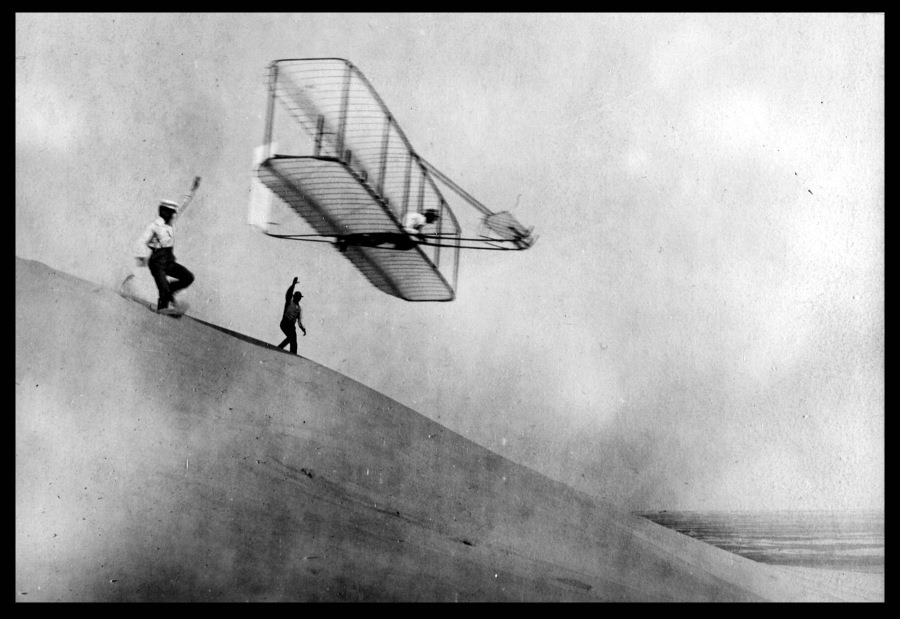
However, his career was also marked by a long-running patent dispute with the Wright brothers. Despite the legal battles, Curtiss remained one of the most influential figures in the development of American aviation and later became a key figure in the industry that evolved into the Curtiss-Wright Corporation.
Glenn Curtiss died on 23 July 1930, aged 52. His contribution to aviation was recognised with numerous posthumous honours, including induction into both the National Aviation Hall of Fame and the National Inventors Hall of Fame.
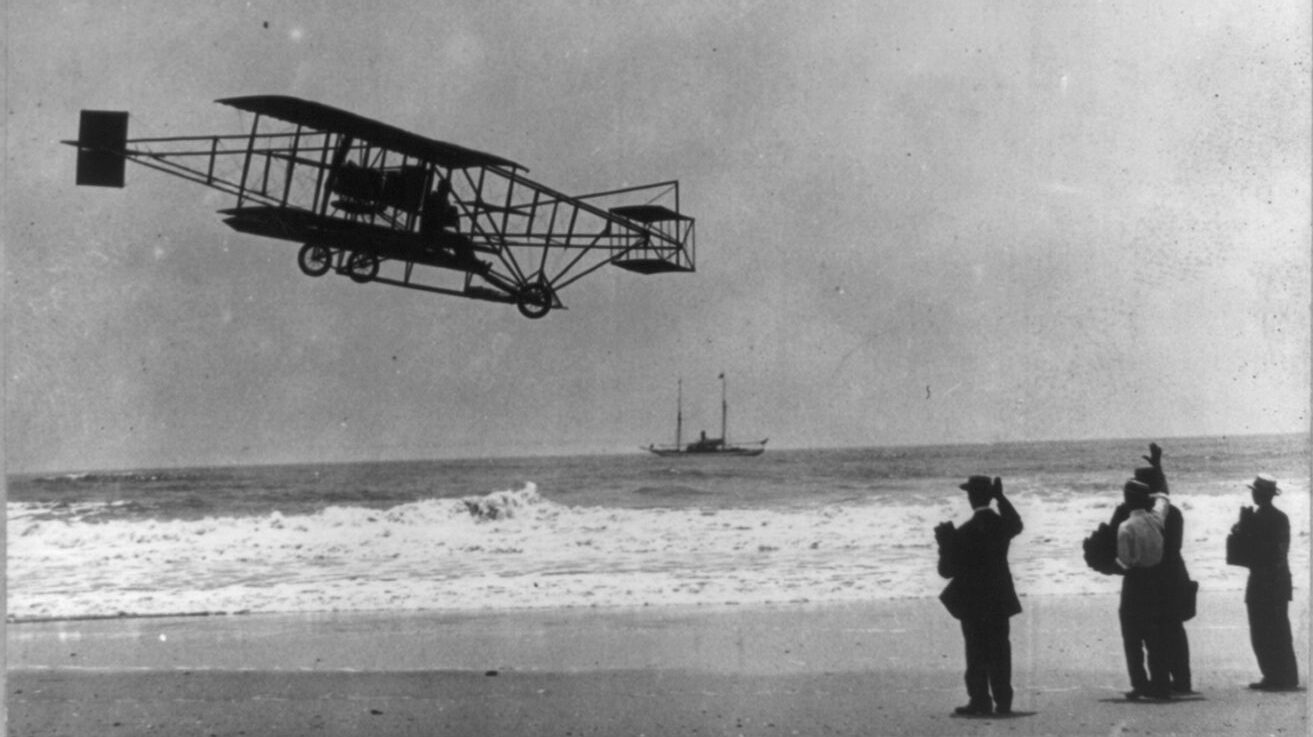
Cover photo: Curtiss at Atlantic city, circa 1911 (Library of Congress Prints and Photographs Division, LC-USZ62-36412, cropped from original)