 The origins of Austro-Hungarian naval aviation can be traced back to 1910, when the naval department of k.u.k. Kriegsministerium (the Imperial and Royal Ministry of War) began to consider the military potential of aircraft. By the end of that year, the first naval officers had started pilot training at the military flying school in Wiener Neustadt.
The first naval air station (Seeflugstation) was established at Pula in 1911–1912 under the command of Linienschiffsleutnant Viktor Klobučar-Rukavina. Initially, the unit operated a single floatplane converted from Klobučar-Rukavina’s privately built Blériot aircraft. The unit´s capabilities expanded rapidly and, in 1913, the Austro-Hungarian Navy purchased Donnet-Lévêque flying boats from France, established its own naval flying school on Cosada Island and introduced the first domestically built flying boats, the Lohner E.
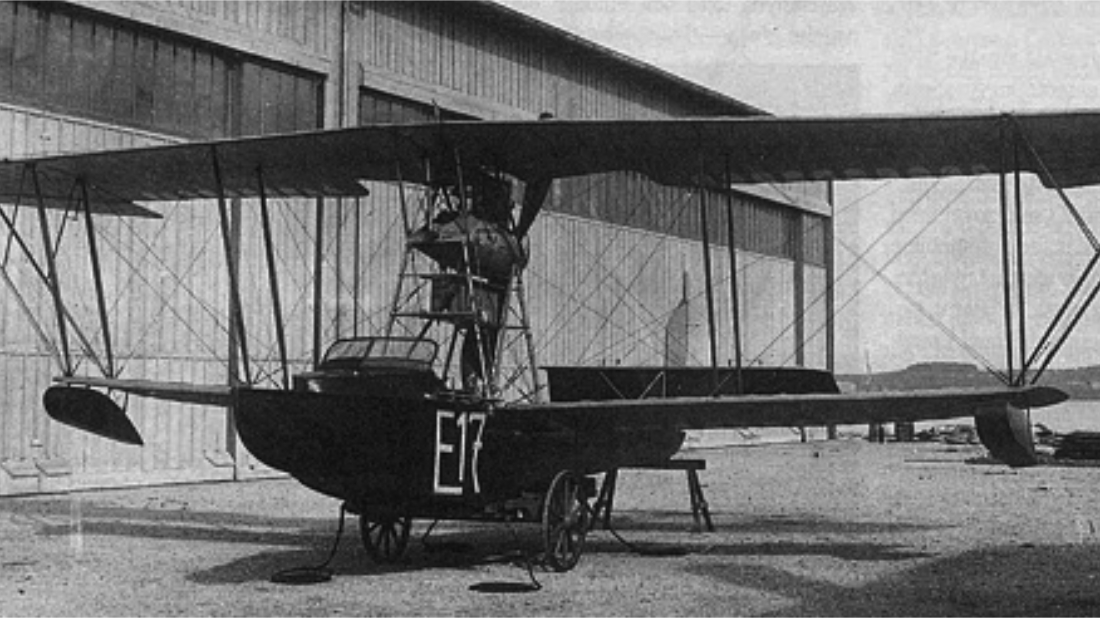
Designed by Igo Etrich and built by Lohner, the Lohner E was a two-seat biplane flying boat in pusher configuration, powered by an 85 hp engine (later upgraded to 100 hp). Around thirty examples were produced and the type soon became the backbone of the fledgling Austro-Hungarian naval air arm. One aircraft, the E17, was equipped with a machine gun, making it one of the world’s earliest armed flying boats.
Following the assassination of Archduke Franz Ferdinand and the growing tensions of the July Crisis, the Austro-Hungarian Navy reinforced its presence in the Bay of Kotor. On 22 July 1914 (23 July according to some sources), three Lohner E flying boats – transported aboard the battleships SMS Radetzky, SMS Erzherzog Franz Ferdinand and SMS Zrínyi – were deployed to Kumbor. Shortly after arriving, the aircraft carried out reconnaissance flights over the bay and the Montenegrin frontier.
These missions are generally regarded as the first operational use of naval aviation in Europe. Just one day later, Austria-Hungary delivered its ultimatum to Serbia, setting in motion the events that led to the outbreak of the First World War. Therefore, the reconnaissance flights over the Bay of Kotor marked the birth not only of Austro-Hungarian naval aviation, but also the beginning of a new chapter in the military use of aircraft at sea.
Cover photo: Lohner E flying boat ´E17´ (photo: Wikipedia Commons, public domain)