 Between 15 and 17 June 2026, the 52nd annual G7 Summit took place in Évian-les-Bains, Haute-Savoie, France. As always, the event required extensive security measures on the ground and in the air. The French and Swiss authorities imposed week-long restrictions, including the closure of several border crossings and setting up reinforced checkpoints, traffic disruptions, and the closure of the airspace around the summit venue. Throughout the summit, Armée de l’air et de l’espace (the French Air and Space Force) played a key role in ensuring airspace security over the summit venue.
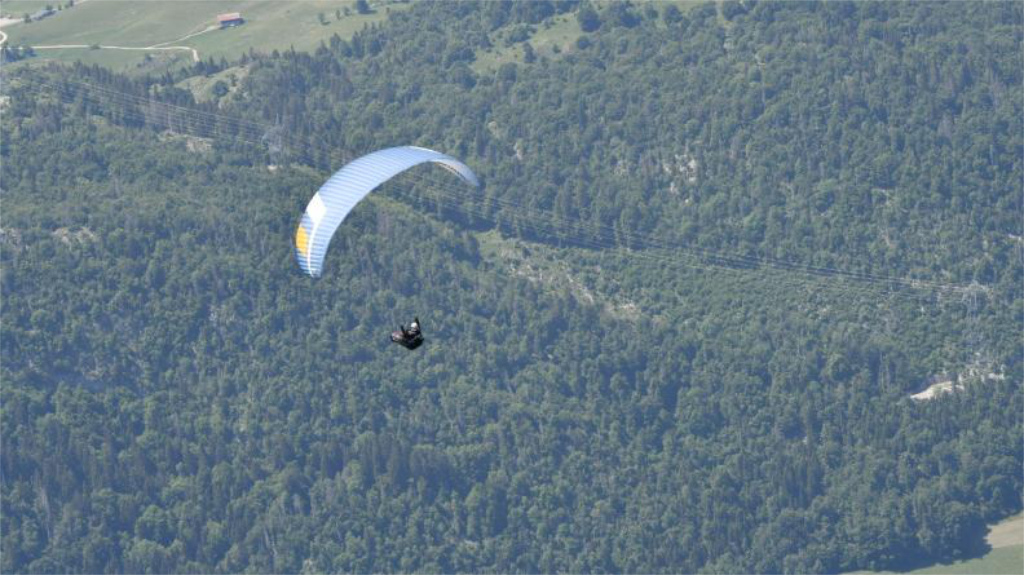
On 17 June, when international delegations were already leaving Évian following the conclusion of the G7 Summit, a paraglider entered the temporary restricted airspace established to protect the event. The incident resulted in what is believed to be the first-ever in-flight interception of a paraglider carried out as part of a French air security operation.
Although the diplomatic meetings had concluded, Dispositif particulier de sûreté aérienne (the Special Air Security Arrangement – DPSA) remained fully operational to ensure the safe departure of heads of state, government leaders and their delegations. The operation involved close coordination between the military and civilian authorities, as well as multiple government agencies.
During the afternoon of 17 June, a paraglider was detected within Zone réglementée temporaire (Temporary Restricted Zone – ZRT) set up around Évian, approximately 20 kilometres from the summit venue. While the aircraft did not pose an immediate hostile threat, its presence inside the restricted area required an immediate response to ensure the security of the event.
Following the detection, the entire operational chain responsible for Posture permanente de sûreté aérienne (Permanent Air Security Posture – PPS-A) was activated through the DPSA. Personnel from Centre Air de planification et de conduite des opérations aériennes et de la défense aérienne (Air Centre for the Planning and Control of Air Operations and Air Defence – CAPCODA) at Lyon-Mont Verdun Air Base was alerted and worked together with Cellule de coordination des activités aériennes (Air Activities Coordination Cell – C2A2) deployed to Évian. The two teams shared and analysed information in real time.
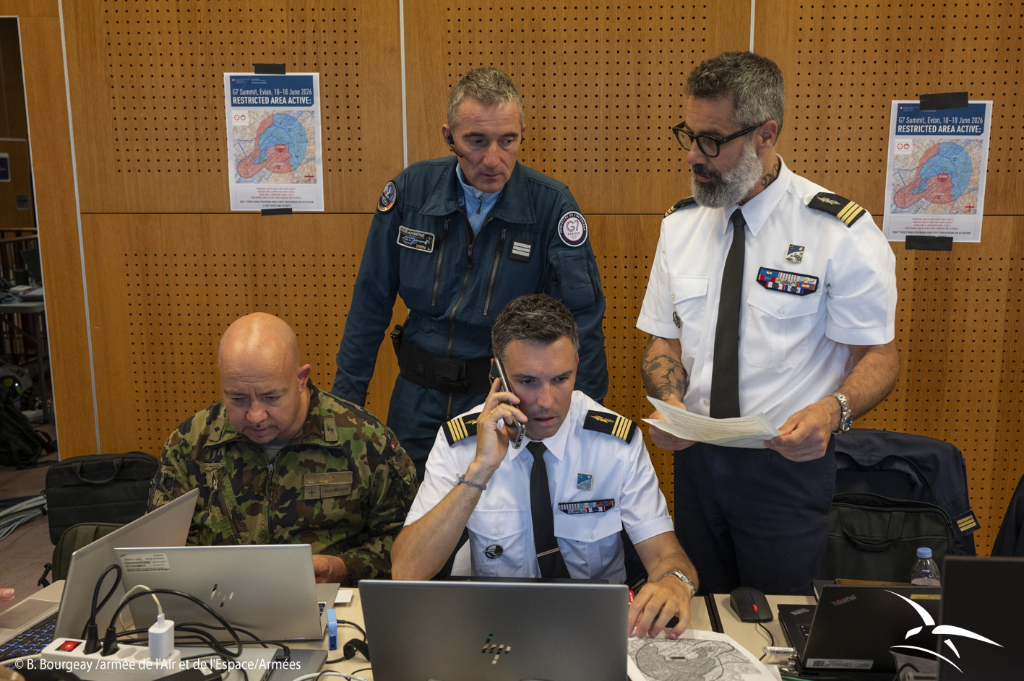
Operating under the authority of Haute Autorité de défense aérienne (High Air Defence Authority – HADA), and being in direct coordination with the Prime Minister’s Office, the command structure maintained a common operational picture and coordinated the assets assigned to the mission.
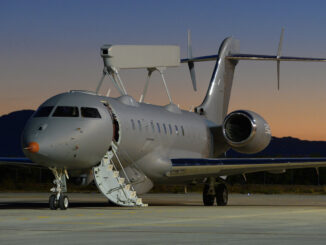
A Swiss Air Force PC-7, circling in a holding pattern, was the first to visually confirm that the paraglider had entered the restricted zone. The crew reported the identification to CAPCODA via the Lyon Detection and Control Centre and was instructed by HADA to maintain visual contact while the situation was assessed. As the aircraft was nearing the end of its available flight endurance, a French Air and Space Force PC-21 that had been airborne on alert. took over the mission.
At the same time, the sensor of an MQ-9 Reaper unmanned aircraft was redirected to provide continuous surveillance of the intruder. The combined use of airborne surveillance assets allowed operators to track the paraglider continuously, assess its behaviour and adapt their response as the situation developed.
Several minutes later, HADA ordered the interception.
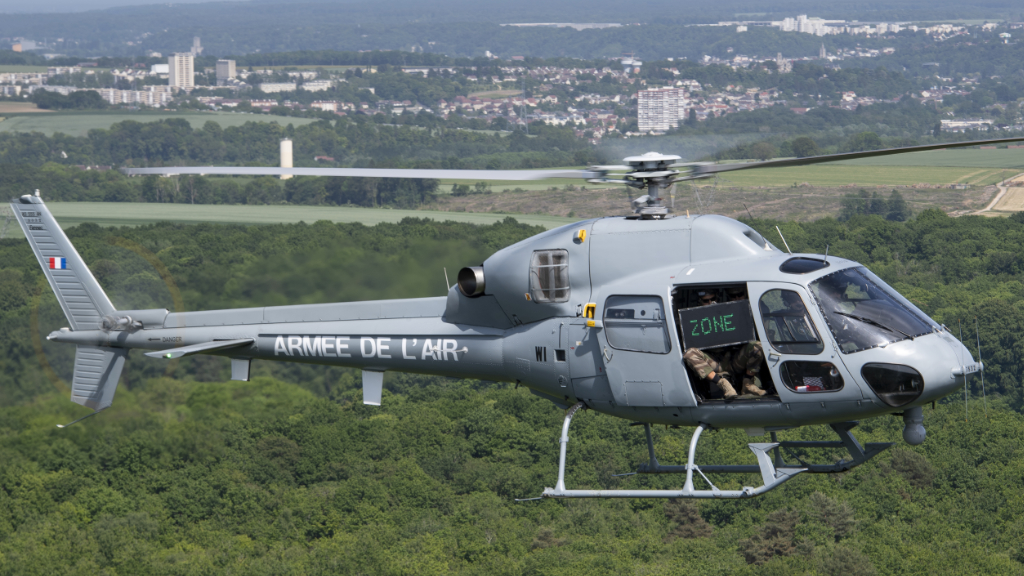
Because of the paraglider’s low speed and low operating altitude, a Fennec helicopter was selected to carry out the mission. Guided by intelligence provided by the MQ-9 Reaper and coordinated by CAPCODA, the helicopter crew intercepted the paraglider mid-flight and directed it to a secure landing area.
According to the French Air and Space Force, this was the first time that a paraglider had been intercepted while airborne during a DPSA operation.
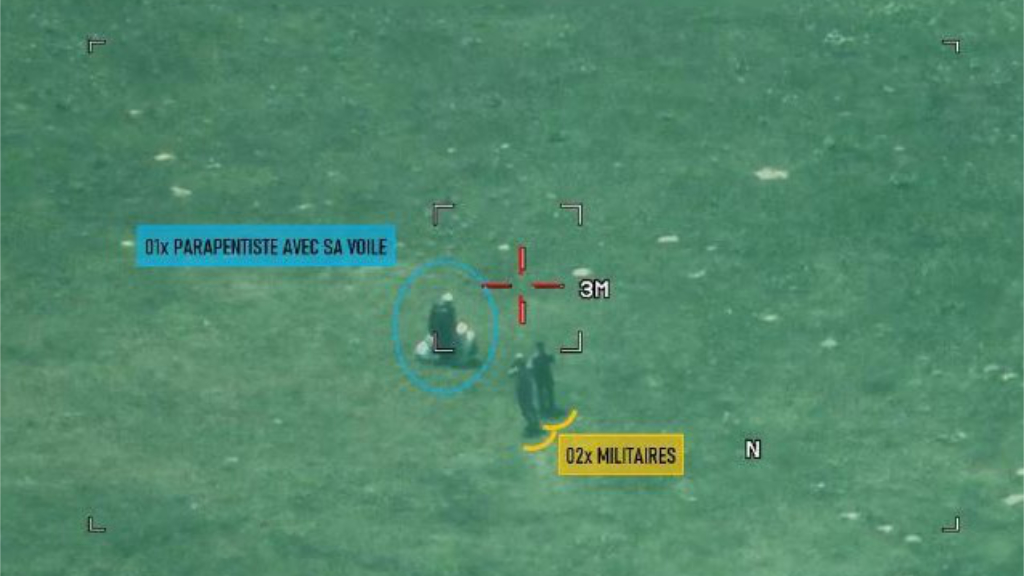
Throughout the mission, the safety of the paraglider pilot remained a priority. After landing, the onboard marksmen from the Fennec helicopter approached the pilot, who complied fully with their instructions. The airmen verified his identity and passed the information to the law enforcement authorities. The unlucky aviator was later summoned by the National Gendarmerie.
The operation brought together surveillance assets, airborne intervention capabilities and internal security forces deployed on the ground.
Overall coordination was provided by Commandement de la défense aérienne et des opérations aériennes (Air Defence and Air Operations Command – CDAOA). Its Chaîne de commandement et de conduite (Command and Control Chain – C2) linked command centres, airborne assets and security forces on the ground. This enabled information collected by various sensors to be rapidly converted into operational decisions and action. According to Armée de l’air et de l’espace, this integrated approach made it possible to reach the area quickly, maintain continuous surveillance of the intruder and complete the interception within a very short timeframe.
The incident occurred only a few hours before the air security measures established for the G7 Summit were lifted. French officials described it as a demonstration of both the responsiveness of the French Air and Space Force and the close cooperation maintained with domestic security services and their Swiss counterparts.
The mission also highlighted the day-to-day role of the French Air and Space Force in maintaining national air security. Similar measures will be implemented during future high-profile events, beginning with the Bastille Day military parade on 14 July.
Information from the press releases of the French Ministry of Defence – published on the MoD page in June 2026 – were used, in accordance to the etalab-2.0 licence. All photos © the French Ministry of Defence.
AI tools used to translate from French.