 Jean-Pierre Blanchard, a French inventor, aviation pioneer and the world’s first professional balloon pilot, was born on 4 July 1753, in Les Andelys, France.
From an early age, Blanchard displayed remarkable mechanical talent and a passion for experimentation. Before turning his attention to aviation, he designed various mechanical devices, including a pedal-powered vehicle and a hydraulic system intended to supply the medieval Château Gaillard with water.
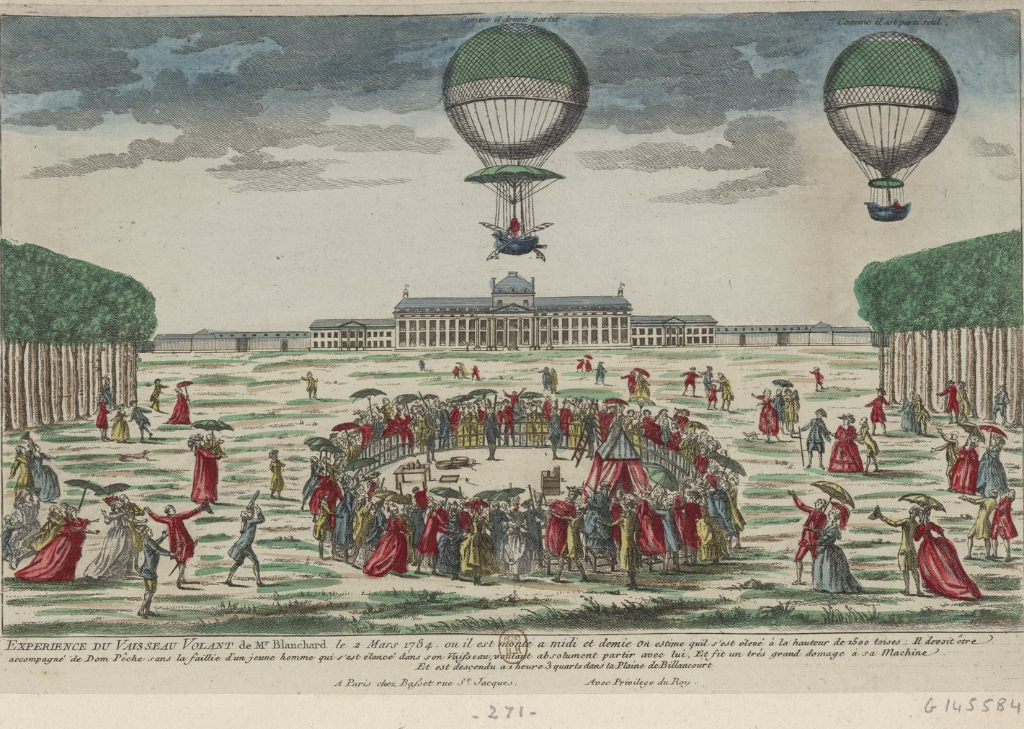
His greatest ambition, however, was to conquer the skies. After unsuccessful attempts to build a flapping-wing flying machine, Blanchard became fascinated by the achievements of the Montgolfier brothers. On 2 March 1784, only a few months after the first manned balloon flights, he successfully ascended in a hydrogen balloon of his own design. Over the following years, he became one of Europe’s most famous aeronauts, performing demonstration flights in several countries and experimenting with methods of steering balloons in flight.
While in England, Blanchard met the American-born physician and scientist John Jeffries, who became both his supporter and flying companion. On 30 November 1784, Jeffries joined Blanchard on a balloon flight from London to Kent. During the journey, they dropped several written messages from the balloon, one of which reached its intended recipient and is regarded as the earliest known example of airmail.
On 7 January 1785, Blanchard and Jeffries achieved their greatest success when they completed the first manned crossing of the English Channel. Taking off near Dover, they landed safely in France after a flight lasting approximately two and a half hours. Their achievement marked one of the most important milestones in the early history of aviation.
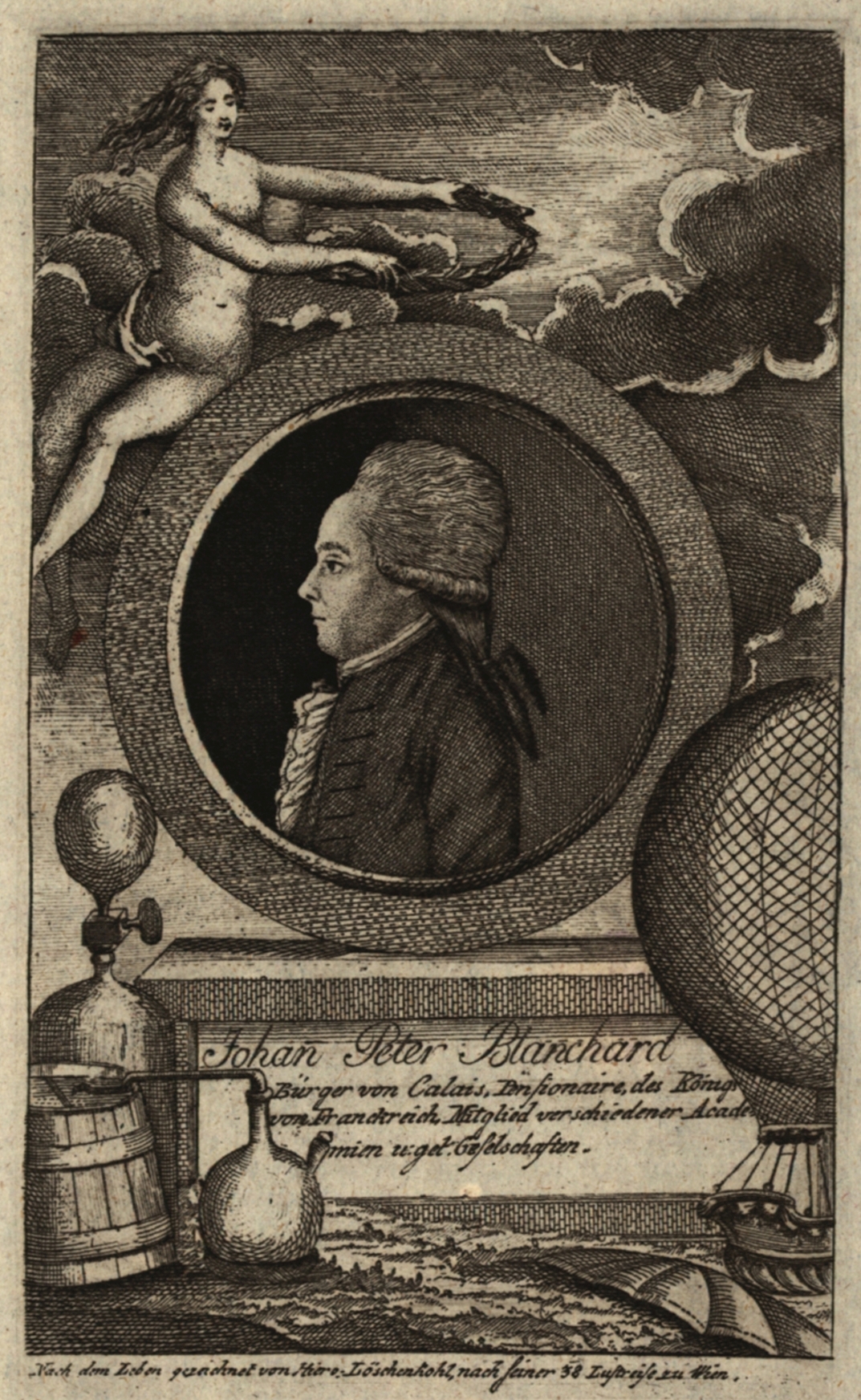
During the following years, Blanchard toured Europe and North America, introducing ballooning to new audiences. He became the first aeronaut to fly in several countries, including Belgium, the Netherlands, Poland and Bohemia. In 1793, he also performed the first balloon flight in the Americas, travelling from Pennsylvania to New Jersey.
Another important chapter in Blanchard’s life was his partnership with Sophie Blanchard. In 1805, she became the first woman to pilot a balloon solo and later gained fame as one of the most celebrated aeronauts of her era. Her success helped to popularise ballooning and secured her place among the pioneers of aviation.
Blanchard was also interested in parachutes and became one of the earliest aeronauts to experiment with their practical use. His work contributed to the development of both ballooning and parachuting during the formative years of aviation.
On 20 February 1808, Blanchard suffered a heart attack while flying over The Hague. He fell from his balloon and died from his injuries on 7 March 1809. After his death, Sophie Blanchard continued her flying career and became the world’s first professional female balloon pilot.
Today, Jean-Pierre Blanchard is remembered as one of the most important pioneers of lighter-than-air flight, whose achievements helped to establish ballooning as both a scientific endeavour and a public spectacle.
More information about Blanchard and his aviation developments in:
- 4 July 1753 – Jean-Pierre Blanchard is born,
- 9 January 1793 – the first balloon flight in the Americas,
- 7 January 1785 – first balloon crossing of the English Channel,
- 18 August 1805 – Sophie Blanchard becomes the first woman to fly solo in a balloon.
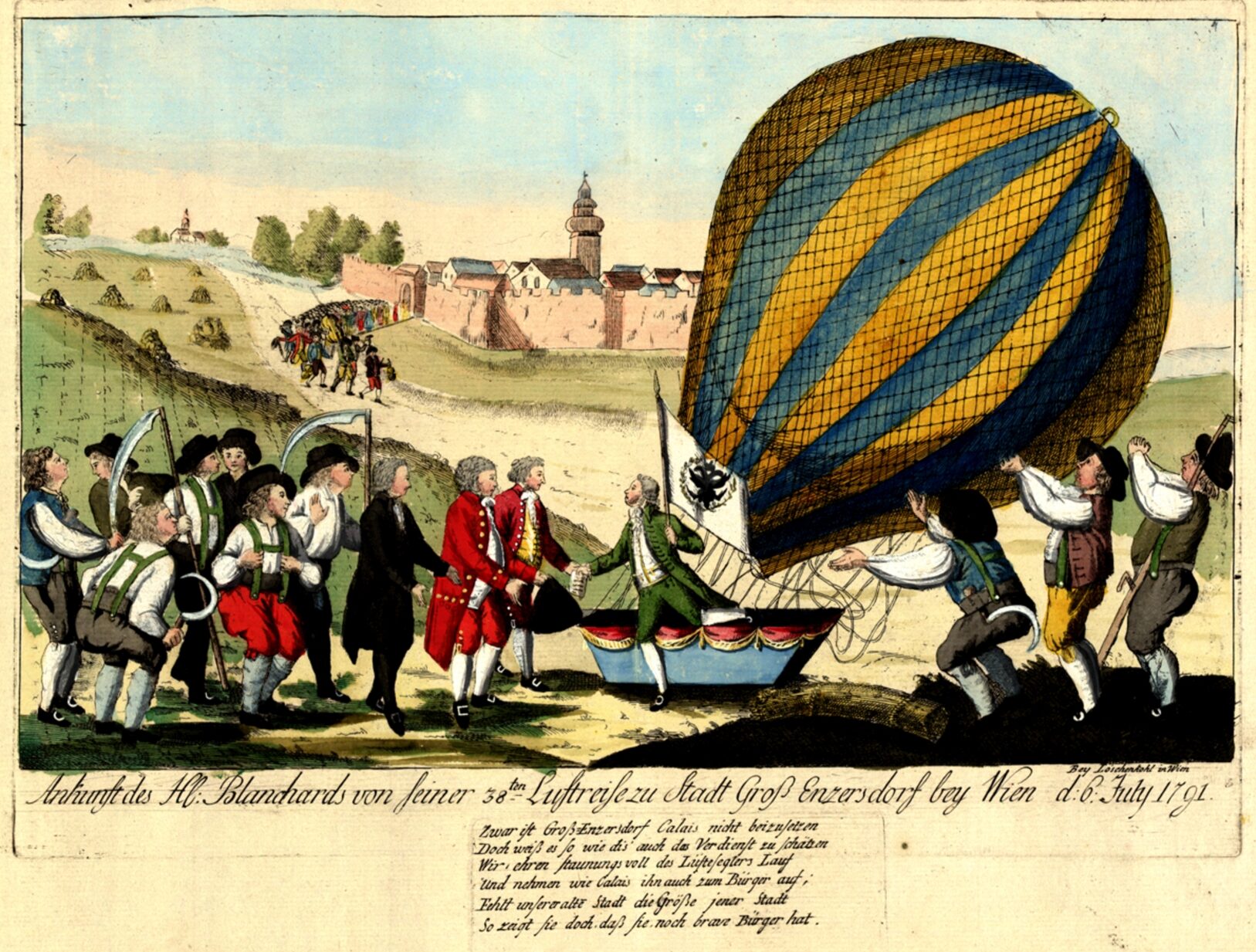
Cover photo: Arrival of Mr. Blanchard from his 38th air journey to the city of Groß Enzersdorf, copperplate engraving by Johann Hieronymus Löschenkohl (source: Wien Museum Inv.-Nr. 62014, CC0)