 On 3 June 1932, the RWD-6, a Polish sports and touring aircraft, successfully completed its maiden flight. Designed by the renowned RWD design bureau, the aeroplane was created specifically for the 1932 Challenge International de Tourisme, one of the most prestigious aviation competitions of the inter-war period.
The aircraft was developed by the team of Stanisław Rogalski, Stanisław Wigura and Jerzy Drzewiecki, whose surnames formed the acronym RWD. Unlike the company’s earlier designs, the RWD-6 was conceived as a highly advanced touring aircraft, capable of excelling in both technical evaluations and practical flying trials.
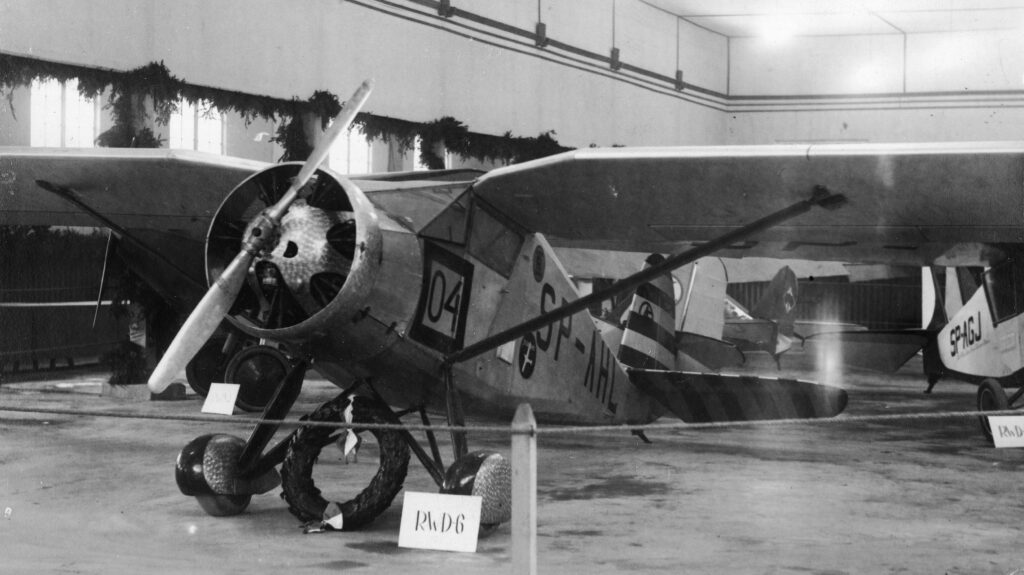
The RWD-6 was a strutted high-wing monoplane of mixed construction with an enclosed two-seat cabin and dual controls. Unlike the previous RWD aircraft, the crew sat side by side rather than in tandem. The fuselage featured a metal framework, with the forward section covered by aluminium panels and the fabric-covered rear section. The rectangular wings were of wooden construction and incorporated several innovative features, including automatic leading-edge slats and flaps. This significantly improved the aircraft’s low-speed handling and short take-off and landing performance. Another practical solution was the ability to fold the wings for transport and storage.
A seven-cylinder Armstrong Siddeley Genet Major radial engine, developing 160 hp, provided power and drove a two-bladed metal propeller. The aircraft was equipped with a fixed landing gear and a tail skid. Thanks to its advanced high-lift devices, the RWD-6 was the first Polish aircraft to be designed specifically with STOL (Short Take-Off and Landing) characteristics in mind.
Three examples of the aircraft were built in the workshops of the Students’ Mechanical Club at the Warsaw University of Technology at Okęcie Airport. The first flight took place on 3 June 1932, with Jerzy Drzewiecki at the controls.
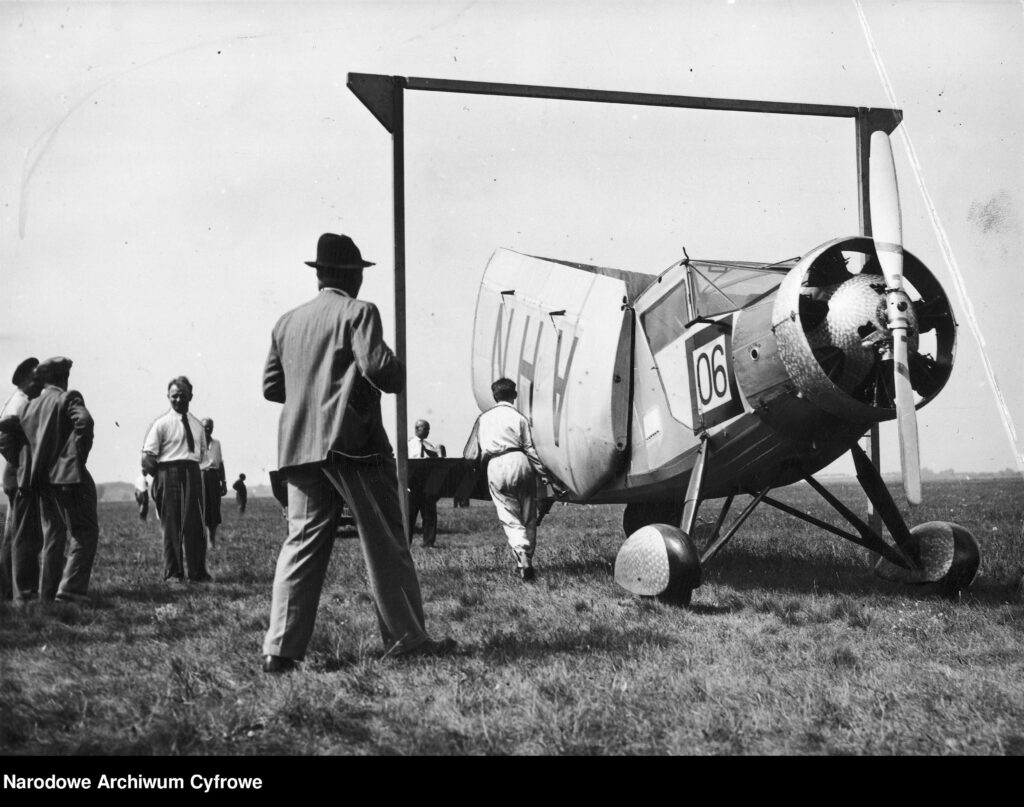
During testing, one aircraft was lost in an accident caused by structural failure of the wings. Although the pilot survived, the incident revealed weaknesses in the design. As a result, the remaining aircraft underwent modifications before entering service.
Despite these issues, the RWD-6 proved to be one of the most technically advanced aircraft to participate in the 1932 Challenge. During the technical trials of the competition, it demonstrated excellent low-speed performance, short take-off capability and rapid wing-folding procedures. These qualities earned the design the highest technical evaluation score among all competing aircraft.
The success of the RWD-6 confirmed the effectiveness of the design philosophy adopted by the RWD team. However, subsequent investigations revealed that the wing struts were not strong enough to prevent excessive wing flexing under heavy loads. To address this issue, the remaining aircraft were rebuilt with reinforced V-shaped struts and were given the new designation RWD-6bis.
Although only three examples of the RWD-6 were built, the aircraft played a significant role in the development of Polish aviation. It introduced advanced STOL solutions that were later refined in subsequent RWD designs, such as the RWD-9, RWD-13 and RWD-15.
Today, the RWD-6 is remembered as a pioneering Polish touring aircraft. During the 1930s, its innovative features helped to establish the Polish aviation industry’s international reputation.
More information about the aircraft, as well as Challenge International de Tourisme competition can be found in our previous artcles 3 June 1932 – First flight of RWD-6 and Challenge International de Tourisme – a competition that marked the history of aviation.
Cover photo: RWD-6 (SP-AHL) with starting number 04, Narodowe Archiwum Cyfrowe 3/1/0/14/1163, Public Domain