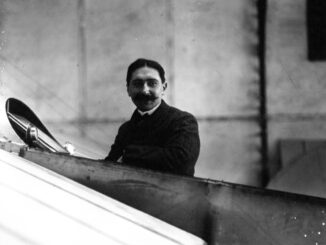
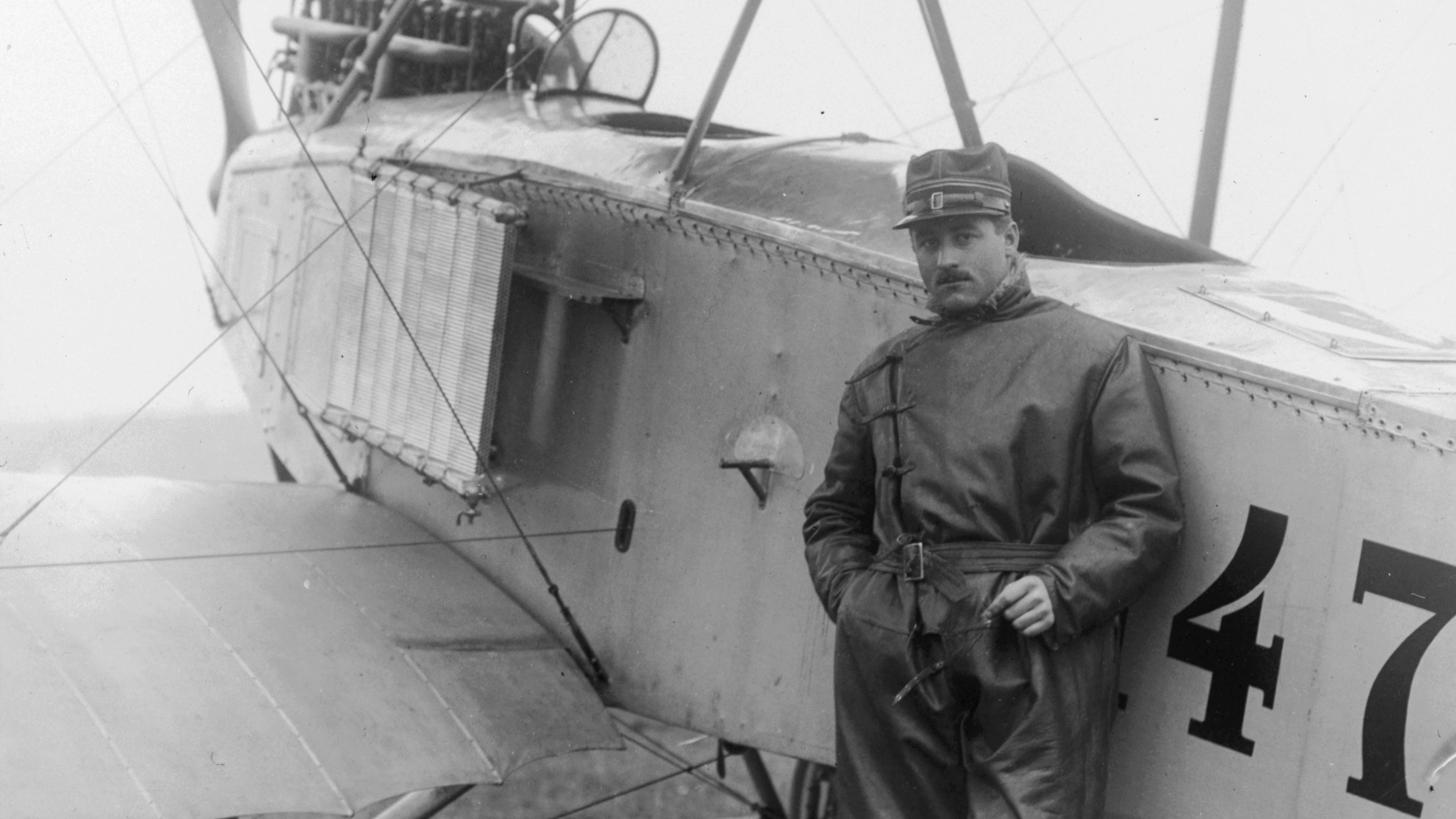
 Oskar Bider was born in 1891 in Langenbruck, Basel-Land. Although he initially planned to become a farmer and even travelled to Argentina to work as a gaucho, he soon realised that his true passion was aviation. Returning to Europe in 1912, he enrolled at Blériot’s flying school in Pau, earning Swiss pilot licence No. 32 after just one month of training.
Soon afterwards, Bider purchased a Blériot XI and quickly gained recognition as a remarkably talented pilot. On 24 January 1913, less than two months after qualifying, he became the first person to cross the Pyrenees in a heavier-than-air aircraft, flying from Pau to Madrid.
Back in Switzerland, Bider continued to reach pioneering milestones. In March 1913, he carried out the country’s first official airmail flight between Basel and Liestal. Two months later, he became the first pilot to cross the Alps from Bern to Sion. However, his greatest achievement came on 13 July 1913, when he successfully completed the Bern–Milan flight, becoming the first person to cross the Alps entirely by air. During the journey, he also set a new Swiss altitude record of 3,600 metres (11,800 feet) and flew over the Jungfraujoch. Less than two weeks later, he returned to Bern via the Lukmanier Pass, becoming the first pilot to cross the Alps in both directions.
Over the following years, Bider continued to push Swiss aviation forward by completing the country’s first night flight, setting a new Paris–Bern speed record and making the first seven-and-a-half-hour flight over Switzerland with two passengers.
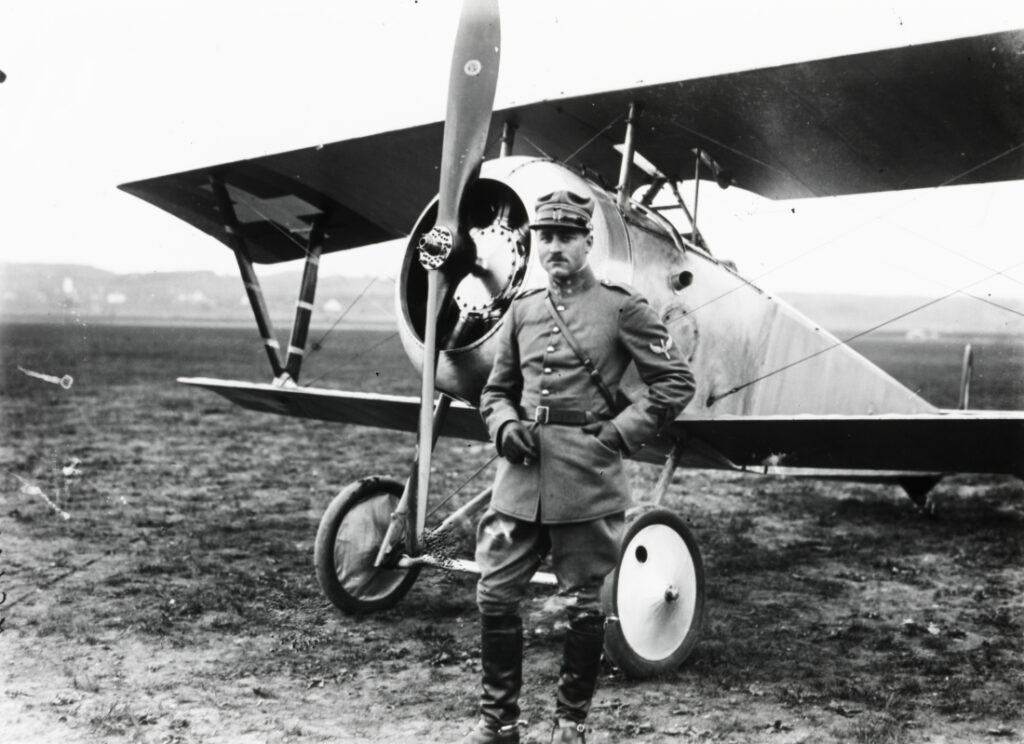
When the Great War began, Bider joined the Swiss military and, together with other aviation pioneers, helped to establish the Swiss Air Force. After the war, he planned to launch a company offering sightseeing flights across Switzerland.
On 7 July 1919, shortly after being released from active military service, Bider took off from Dübendorf in a Nieuport 23 to perform an impromptu aerobatic display for friends. During the flight, the aircraft stalled and crashed, killing the 28-year-old pilot instantly. The tragedy was compounded when his younger sister, Julie Helene Bider, took her own life later that day upon learning of his death.
The official investigation never disclosed a definitive cause of the accident, although later researchers suggested that loss of consciousness – or even suicide – may have been the reason.
Today, Oskar Bider is remembered as one of the pioneers of Swiss aviation. Several streets bear his name, there is a monument to him in Bern, and one of the hangars at Bern Airport has been named in his honour.
Cover photo: Oskar Bider in front of the Wild WTS, CH-147 (ETH-Bibliothek Zürich, Bildarchiv/Stiftung Luftbild Schweiz / LBS_SR02-20035 / CC BY-SA 4.0, cropped)