 The Westland Lynx is one of the most successful naval helicopters developed during the Cold War. Designed in the late 1960s as a successor to the Scout and Wasp helicopters, the new rotorcraft performed its maiden flight on 21 March 1971. Thanks to its outstanding performance and versatility, the new aircraft quickly established an excellent reputation.
The Lynx family was eventually acquired by seventeen countries and more than 450 helicopters were built in over forty variants before production ended in the early 2000s, when the type was succeeded by the AgustaWestland AW159 Wildcat.
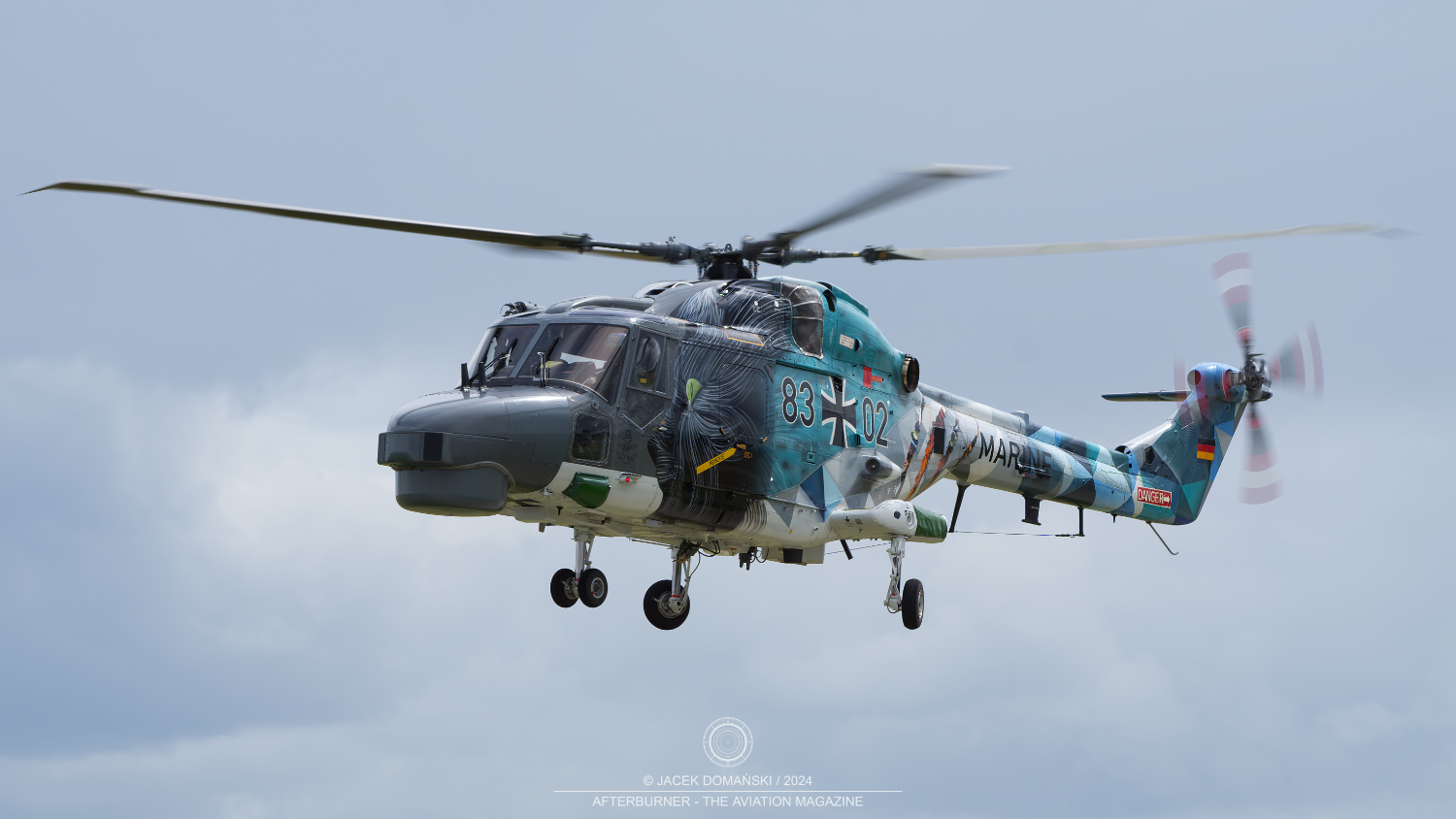
Germany became one of the earliest export operators of the Lynx. In 1981, the Bundesmarine (German Navy) received its first Sea Lynx Mk 88 helicopters, initially ordering nineteen examples for deployment aboard its frigates. Fifteen years later, the fleet was expanded with seven newly built Super Lynx Mk 88A helicopters. Between 1998 and the end of the decade, seventeen of the original Mk 88 aircraft were also upgraded to the Mk 88A standard, resulting in a largely uniform fleet.
Compared with the original Sea Lynx, the Mk 88A introduced significant improvements, including a modern mission suite, an omnidirectional search radar housed in an under-nose radome and a forward-looking infrared (FLIR) sensor. These upgrades considerably enhanced the helicopter’s anti-submarine and maritime surveillance capabilities, allowing it to remain operational well into the twenty-first century.
The German Sea Lynx fleet was initially assigned to Marinefliegergeschwader 3 (Naval Air Wing 3) “Graf Zeppelin”, based at Nordholz Naval Air Base in Lower Saxony. Following the restructuring of the German armed forces in November 2012, all helicopters were transferred to Marinefliegergeschwader 5, which became the German Navy’s sole helicopter unit.
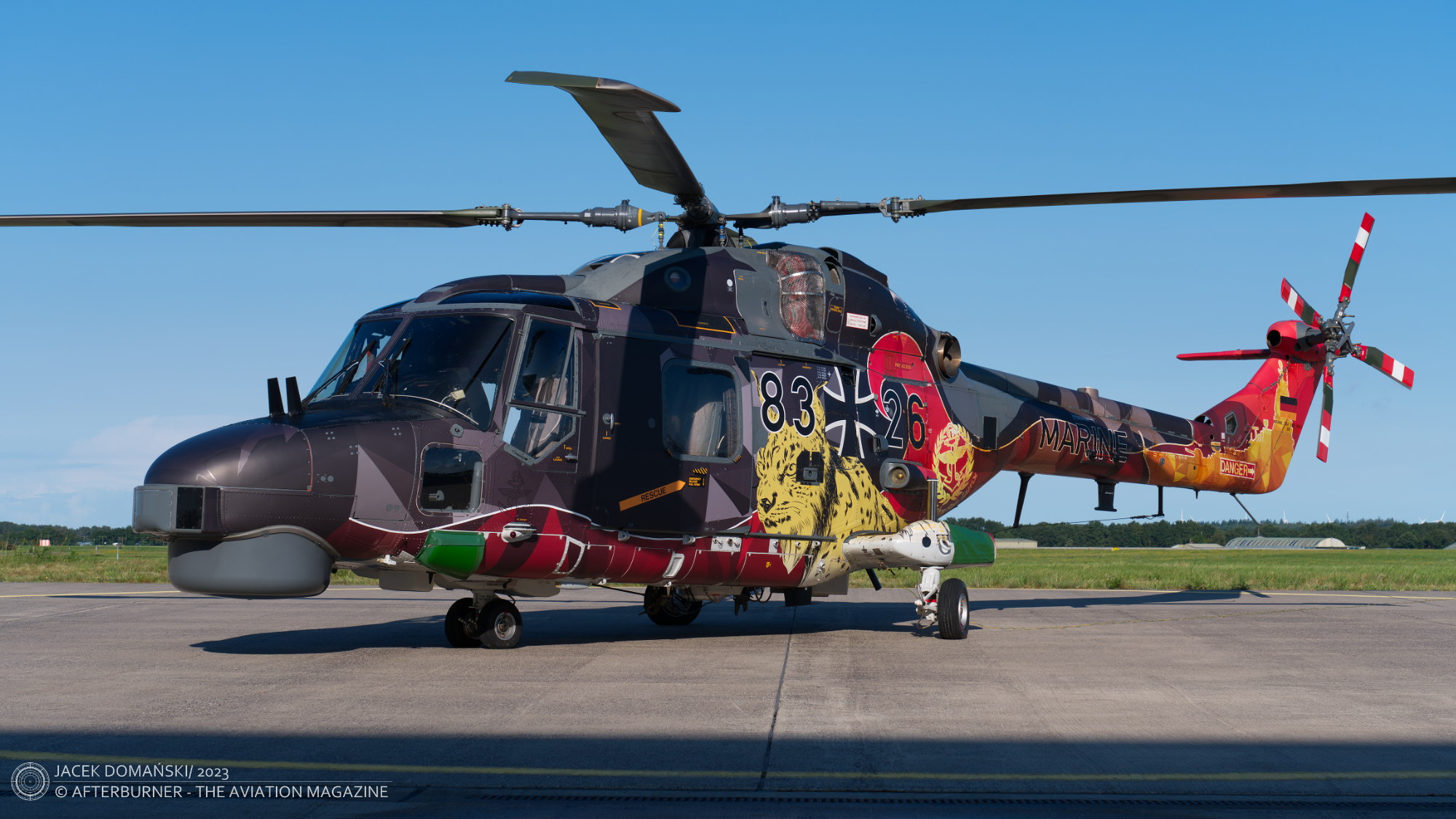
Throughout most of the Cold War, the Sea Lynx primarily operated as an embarked helicopter aboard German Navy frigates, specialising in anti-submarine warfare. Equipped with sonar, torpedoes and advanced maritime sensors, the helicopter significantly extended the operational capabilities of its host vessels. Following the end of the Cold War, its mission profile gradually expanded to include maritime surveillance, anti-piracy operations and support for multinational security missions, including the European Union’s Operation IRINI enforcing the arms embargo on Libya.
However, as a result of the generational change in the Marineflieger fleet, all the aircraft developed during the Cold War era have been withdrawn from active service. These include the P-3C Orion maritime patrol aircraft, and both the Sea King Mk 41 and the Lynx rotorcraft.
After more than four decades of operational service, the Sea Lynx has now reached the end of its career in Germany. Although the decision to retire the type was announced in 2017, the transition gathered pace following the delivery of the first Sea Tiger helicopter in December 2025.
Throughout 2026, the remaining Sea Lynx helicopters have been conducting a nationwide farewell tour, visiting numerous military air bases and aviation events before their final withdrawal from service at the end of the year. The legendary rotorcraft is now being replaced by the NH90 Sea Tiger, which will assume the German Navy’s anti-submarine and anti-surface warfare missions for decades to come.