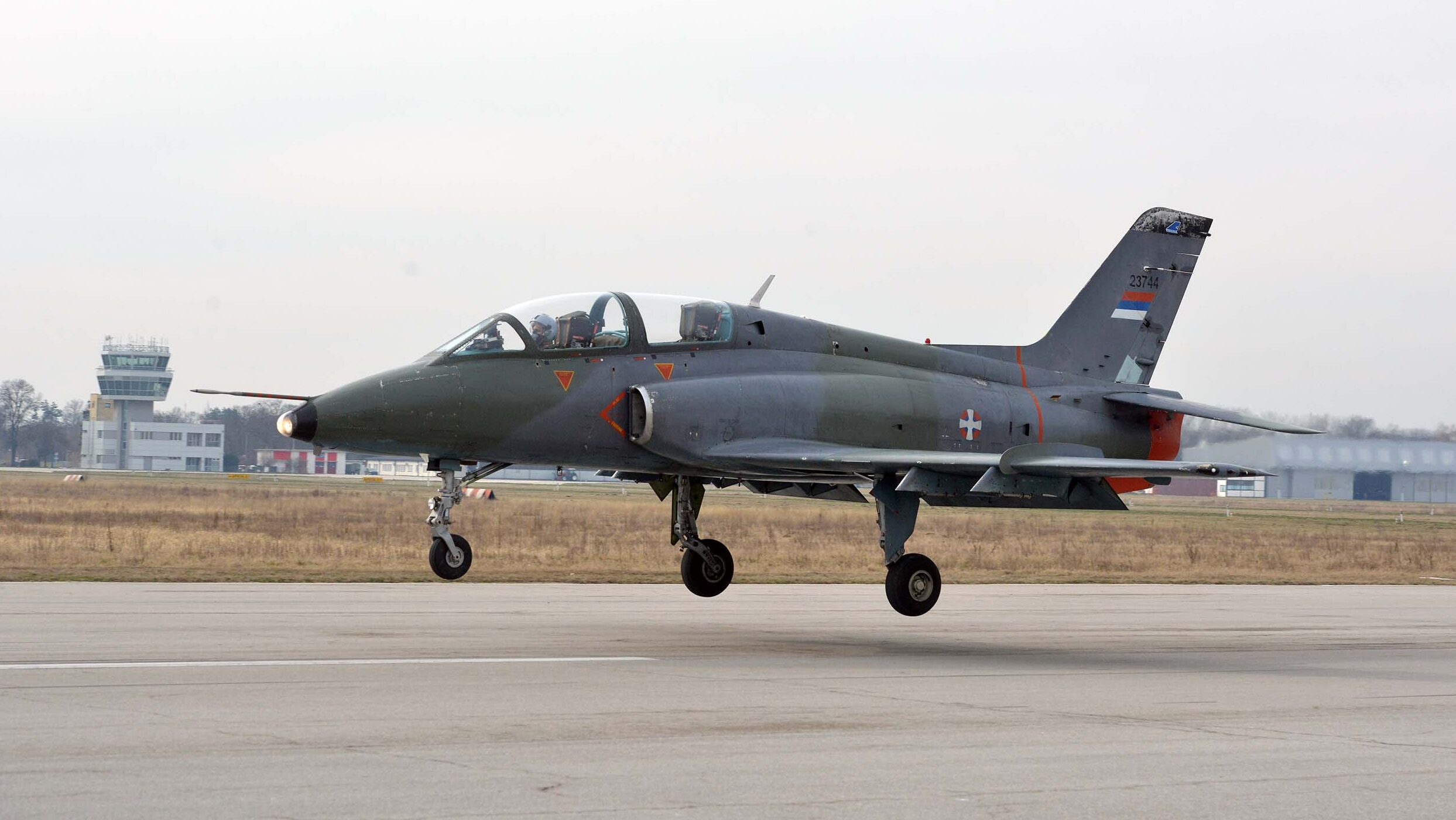
 On 17 July 1978, the Yugoslav SOKO G-4 Super Galeb jet trainer and light attack aircraft made its maiden flight.
The G-4 Super Galeb (Super Seagull) was developed in the late 1970s in the former Yugoslavia. The aircraft was designed as a replacement for the G-2 Galeb jet trainer, which had entered operational service in the early 1960s. Although the new aircraft shared both its name and its Rolls-Royce Viper turbojet engine with its predecessor, the Super Galeb was not an upgraded G-2 but an entirely new design.
The prototype successfully completed its maiden flight on 17 July 1978. Shortly afterwards, the Yugoslav aviation authorities concluded that the aircraft met all the requirements for a new jet trainer and light attack aircraft, and an order for six pre-production examples was placed. Deliveries of the initial batch began later that year, after which the aircraft underwent a series of further tests and evaluation flights. Following their successful completion, the Super Galeb was approved for serial production.
In 1983, the new trainer officially entered operational service.
The Super Galeb was designed to serve as both a jet trainer and a light attack aircraft. It is capable of covering the entire spectrum of pilot training, from the basic syllabus to advanced jet instruction. All aircraft of this type are equipped with Martin-Baker ejection seats and avionics that enables operations in adverse weather conditions. They also have hardpoints for carrying external fuel tanks, weapons or reconnaissance pods. The aeroplane can carry a wide range of Western- and Eastern-produced weapons, including a twin-barrel GSh-23L cannon mounted beneath the fuselage and AGM-65 Maverick air-to-ground missiles.
Approximately 85 examples of the Super Galeb aircraft were built. Although the type was entered into several international competitions for advanced jet trainers, including the Joint Primary Aircraft Training System programme of the USAF and the US Navy, the Yugoslav Air Force remained its only major operator. The only export customer was the Myanmar Air Force, which acquired six aircraft in 1991. Following the break-up of Yugoslavia, part of the former Yugoslav Air Force fleet was taken over by the air forces of Serbia, Montenegro, and Bosnia and Herzegovina.
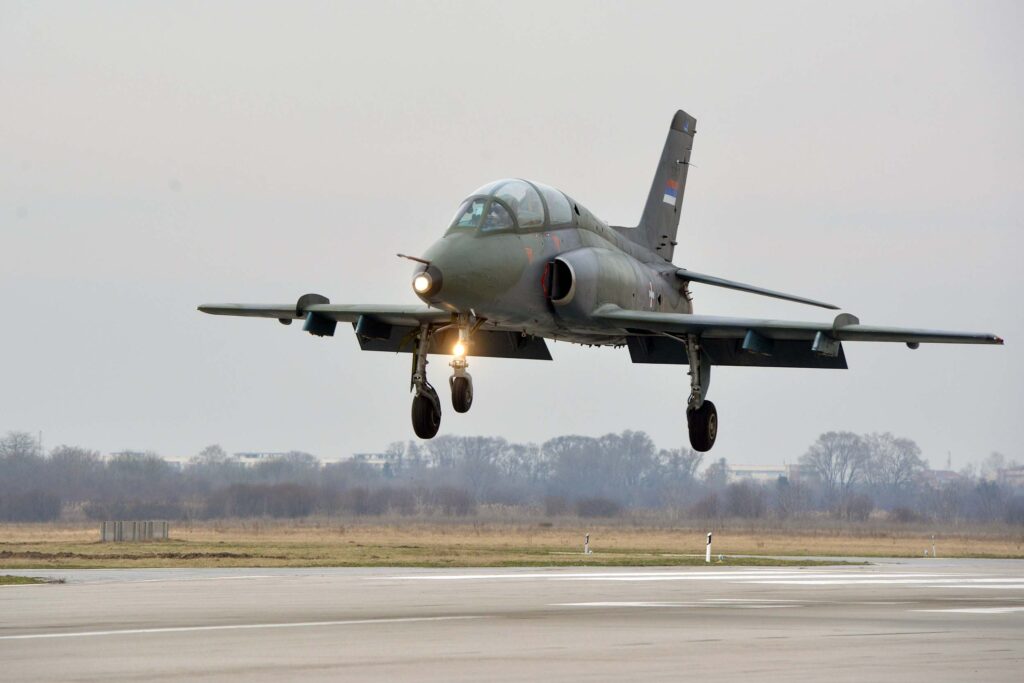
The Yugoslav Air Force’s G-4s took part in combat operations during the Yugoslav Wars of the 1990s. At least three aircraft were reportedly shot down, while several others were destroyed on the ground.
An interesting chapter in the Super Galeb’s history was its service with the official aerobatic display team of the Yugoslav Air Force. Known as Leteće zvezde / Летеће звезде (The Flying Stars), the group was active from 1985 until 2000. Initially, the Flying Stars flew the SOKO J-21 Jastreb, but in 1990 they switched to the G-4 Super Galeb. Regrettably, all seven aircraft assigned to the team were destroyed on the ground at Podgorica Air Base during the Yugoslav Wars. This, combined with the difficult financial situation of the Serbian Armed Forces in the post-war years, ultimately led to the team’s disbandment in 2000.
The Super Galebs that remain in service with Ратно ваздухопловство и противваздухопловна одбрана Војске Србије (the Serbian Air Force and Air Defence) have undergone two modernisation programmes. The first, designated the G-4M (“Modernised”), was launched in 1999, with the upgraded prototype completed in 2002. The aeroplane featured new avionics with a head-up display (HUD) and multi-function displays, upgraded hardpoints for additional equipment, and improved flight characteristics.
The second upgrade, designated the G-4MD (“Modernised Digital”), includes LCD multifunction displays, a new mission computer, GPS navigation, an upgraded identification and communications suite, and integration of modern precision-guided weapons. This programme is expected to extend the operational life of the Super Galeb in the Serbian Air Force service until at least 2035.
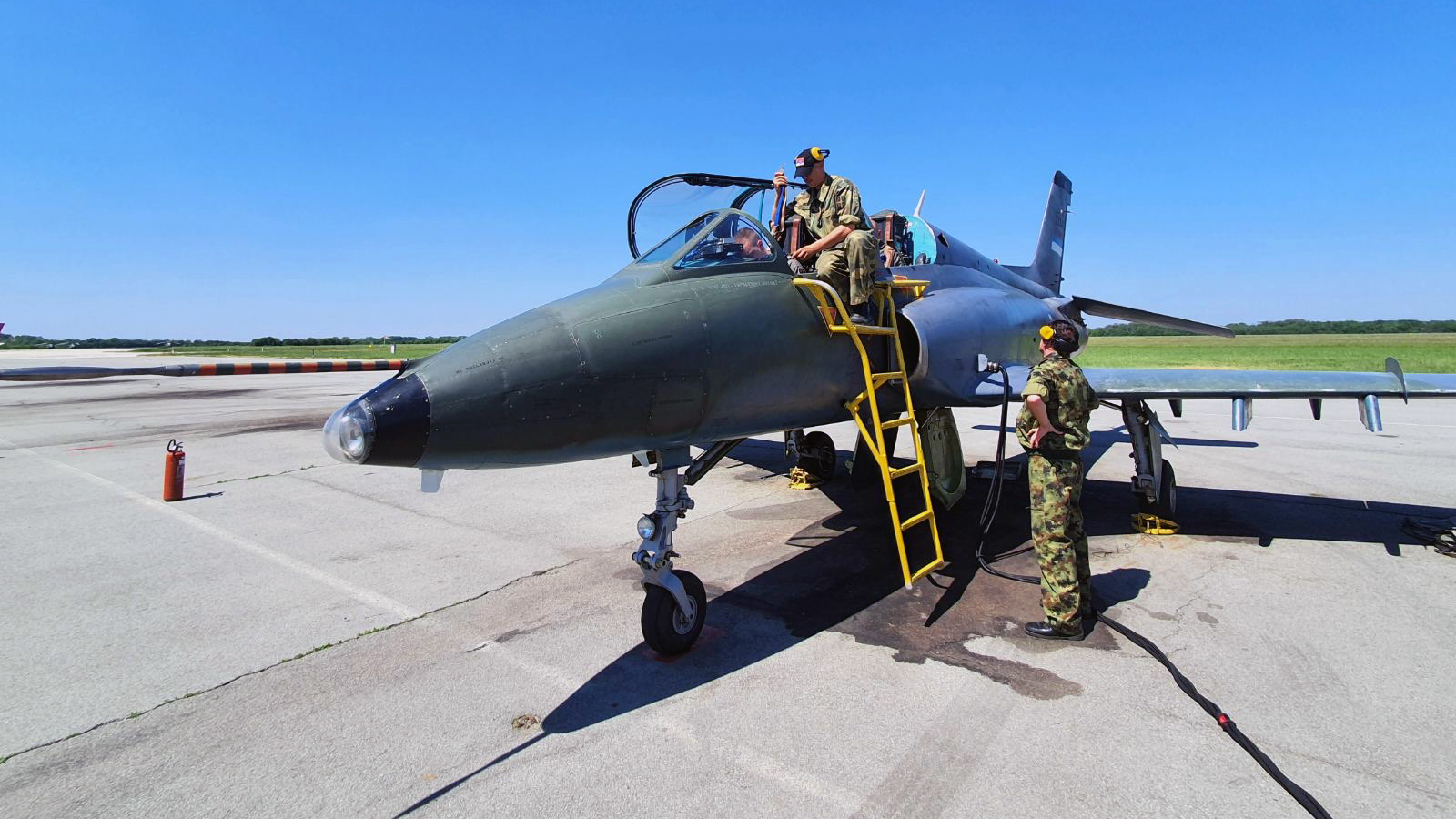
Nowadays, the G-4 is primarily used in the final stage of pilot training within the Serbian Air Force. Before progressing to the Super Galeb, cadets complete their basic flying training on the Lasta 95 (Barn swallow) piston-engined trainer before moving on to theoretical and practical instruction on the G-4.
All photos © Министарство одбране Републике Србије / MoD Republic of Serbia. MoD press releases were used. Cover photo – SOKO G-4 Supergaleb (2021), © MoD Republic of Serbia.