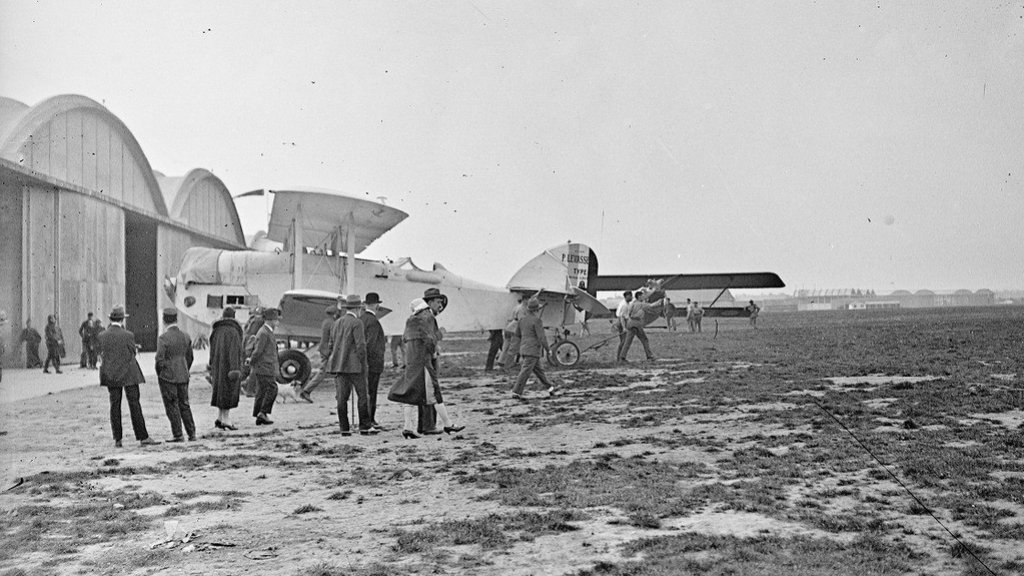
 On 8 May 1927, Charles Nungesser and François Coli began their transatlantic flight attempt, flying the Levasseur PL.8.
In April 1913, the Daily Mail officially launched a transatlantic flight competition. The editorial office offered a prize of £10,000 – equivalent to almost £1.5 million today – to “the aviator who shall first cross the Atlantic in an aeroplane in flight from any point in the United States of America, Canada or Newfoundland to any point in Great Britain or Ireland in 72 continuous hours”. The prize encouraged several aviation pioneers to design aircraft capable of crossing the ocean. However, the outbreak of the Great War halted their efforts, and the competition was suspended until 1918.
Just one year after the Daily Mail re-announced its competition, another transatlantic prize was introduced. It was established by Raymond Orteig, a French-American hotel owner from New York, and became known as the Orteig Prize. Orteig offered $25,000 – equivalent to approximately $441,000 today – for any Allied aviator to fly between Paris and New York, regardless of direction. The offer was valid for five years, but it was considered beyond the capabilities of contemporary aircraft, and ultimately no one entered the competition.
In 1925, Raymond Orteig renewed the prize, and this time the offer attracted several aviators. Among them were Charles Nungesser and François Coli, two renowned French aviators from the First World War years.
Nungesser was one of the war’s heroes. He was a skilled pilot and adventurer, as well as the third highest-ranking French fighter ace, credited with forty-three aerial victories.
Coli was no less experienced pilot, but his wartime service brought him particular recognition as an exceptional navigator and squadron leader. He was also known for a series of record-setting long-distance flights completed shortly after the war.
Initially, Nungesser planned to cross the Atlantic alone, while Coli intended to join Paul Tarascon on a flight in a Potez 25. However, Tarascon was badly injured in an accident in which his aircraft was damaged beyond repair. Consequently, following the advice of the French aviation designer Pierre Levasseur, Nungesser and Coli decided to combine their efforts and attempt the transatlantic flight together.
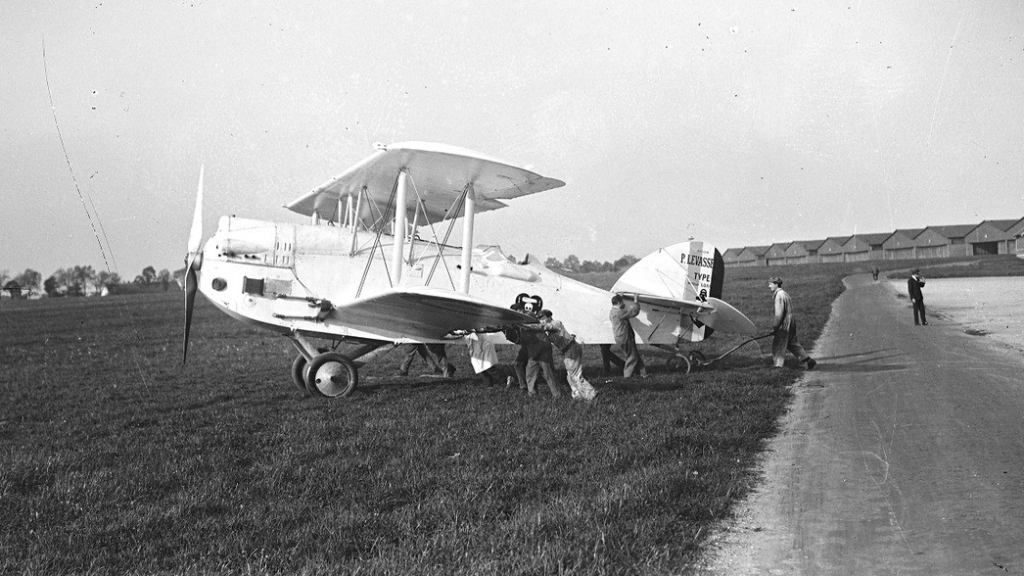
The aircraft they chose for the record attempt was the Levasseur PL.8 biplane. It was a newly developed aircraft based on Levasseur’s earlier design, the Levasseur PL.4, that made its first flight in April 1927.
The PL.4 featured a three-seat open cockpit in tandem configuration. In the new aeroplane, the cabin was modified by removing the two forward seats and widening the rear cockpit to allow the crew to sit side by side. The Levasseur PL.8 had a single-bay plywood fuselage covered with fabric. The original wooden wings were enlarged, with the wingspan increased to 15 metres. The aircraft was equipped with two additional fuel tanks and a tailskid undercarriage, that could be jettisoned after take-off to reduce weight. The new aeroplane was powered by a 460 hp single Lorraine-Dietrich W-12 engine.
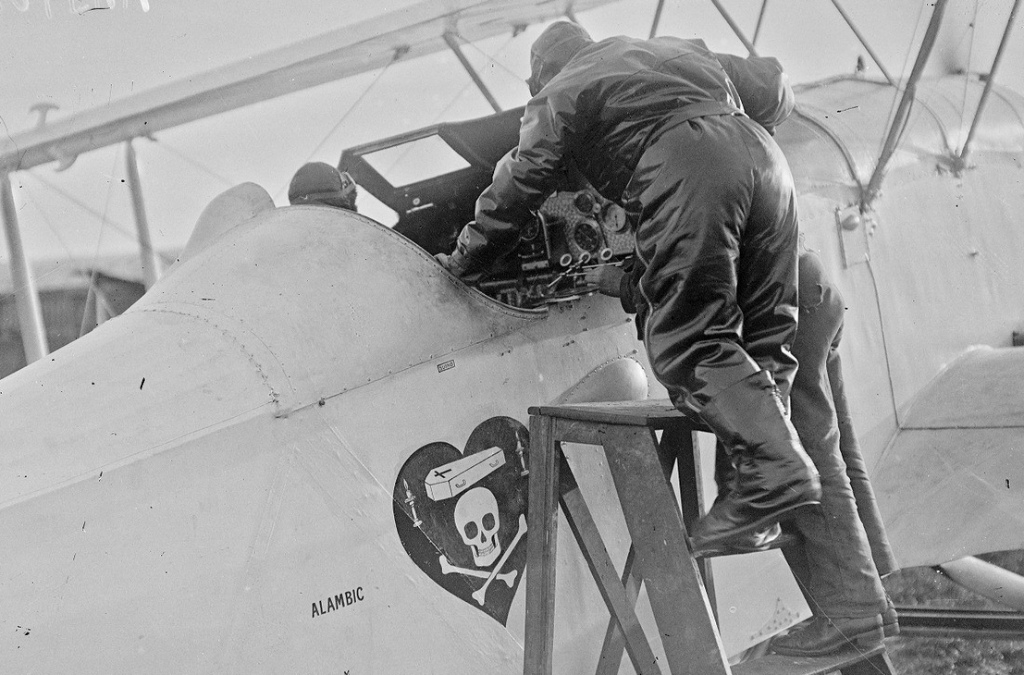
The aircraft prepared for the transatlantic journey was named L’Oiseau Blanc (The White Bird). It was painted white and carried Nungesser’s personal emblem, previously used on his fighter aircraft – a black heart adorned with a skull and crossbones, candles and a coffin.
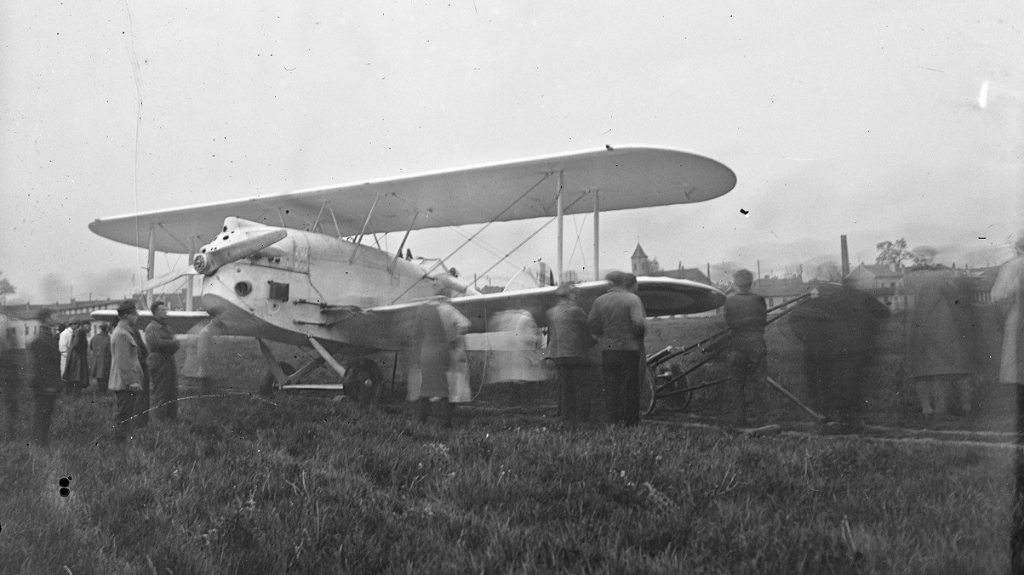
On 8 May 1927, at 05:17 in the morning, the two aviators took off from Le Bourget Airport and headed for New York. Their planned route was to fly over England and Ireland, then across the Atlantic to Newfoundland, followed by Boston, and finally New York.
The undercarriage was jettisoned shortly after take-off, as the crew intended to conclude the flight with a water landing. Initially, the PL.8 was escorted by French military aircraft. Later, it was sighted by a British submarine and observers in Ireland. The last confirmed report came from the village of Carrigaholt, after which L’Oiseau Blanc disappeared over the Atlantic Ocean.
Although crowds gathered in New York City to witness the historic arrival, the Levasseur PL.8 never reached its destination. Approximately forty-two hours after take-off – the maximum flight endurance estimated for L’Oiseau Blanc – Nungesser and Coli were officially declared lost.
Although an international search was launched, no trace of the aircraft or its crew was found. The French aviators were ultimately presumed dead, most likely as a result of crashing into the Atlantic Ocean.
Nevertheless, the exact cause of their disappearance has never been determined. Numerous theories have emerged regarding the final stage of the flight. The White Bird was reportedly sighted over several locations in Maine and Newfoundland, but none of these reports led to definitive conclusions.
In subsequent years, fragments of wooden aircraft structures were discovered in Canada and the United States, and were often speculatively linked to L’Oiseau Blanc. Several expeditions organised in the 1980s and 1990s attempted to locate the wreck. These efforts produced additional witness accounts and debris, but none could be conclusively connected to Nungesser and Coli.
Today, the most widely accepted – though still unconfirmed – hypothesis is that Nungesser and Coli reached the North American coast, after which L’Oiseau Blanc crashed in a remote region of Canada or the United States.
In 1928, a second example of the PL.8 was constructed, this time powered by a 500 hp Hispano-Suiza 12M engine. The aeroplane was initially used to carry air mail, but it was damaged during landing the following year and not repaired.
Ultimately, the Orteig Prize was won by Charles Lindbergh, then a relatively little-known air mail pilot from the United States. In May 1927 he successfully crossed the Atlantic in his custom-built aircraft, the Spirit of St. Louis.
More information about the history of the transatlantic flights can be found in our featured story, Across the ocean – astonishing stories of transatlantic flights.
Cover photo: Preparations for the transatliantic flight, 1927 (gallica.bnf.fr / Bibliothèque nationale de France, ark:/12148/btv1b532406438, cropped)